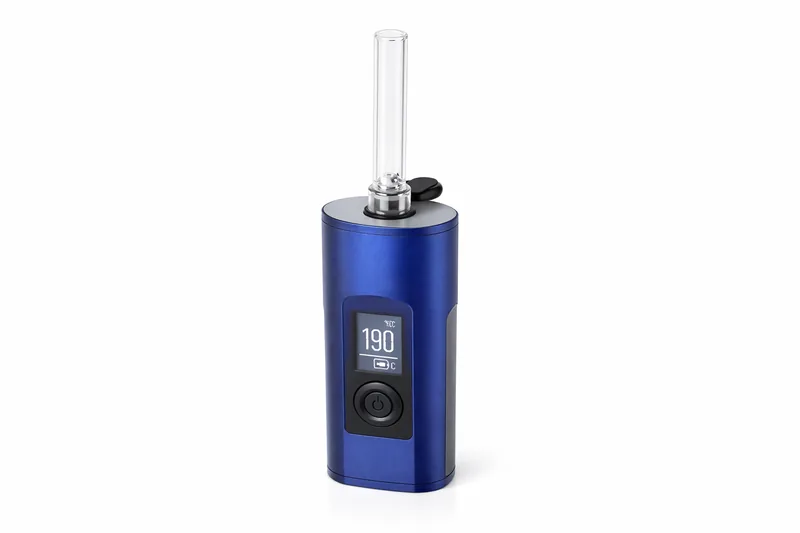
The Arizer Solo 2 is for people who prioritize what the vapor tastes like above everything else. If you've been using a conduction portable and wondering why the flavor always feels muted or slightly off, switching to the Solo 2's pure convection glass stem system will answer that question immediately. The difference is real and it's immediate.
This is also the right pick for people who primarily vape at home, in a car, or somewhere that doesn't require maximum discretion. The glass stem sticking out of the device is distinctive — you are not hiding what this thing is. If you're at your desk, on a patio, or in a vehicle, that doesn't matter. If you're trying to blend into a crowd, it does.
Value-conscious buyers stepping up from cheap conduction portables will find the Solo 2 a significant improvement. At $149 it's not budget-tier, but it competes well against devices that cost significantly more. If you can't stretch to $279 for the Crafty+ but want real vapor quality, the Solo 2 at $149 is the answer.
The glass stem convection system is what defines the Arizer Solo 2 and separates it from anything else at this price. Here's how it works: the herb loads directly into the glass stem, and the heated air from the oven flows through the packed herb on its way to your mouth. Pure convection — the herb gets cooked by air, not by sitting on a hot surface. The result is vapor that is cleaner, cooler, and more flavorful than you'd ever get from a conduction unit.
Best flavor range on the Solo 2 is 185–205°C (365–401°F). Below 185°C you're getting light hits with maximum flavor but less density. At 200–205°C the vapor gets noticeably thicker while the flavor remains excellent — that's the sweet spot for most users. The glass stem keeps none of the vapor taste; everything you pull is clean herb, not plastic or rubber warming up alongside the device.
Some of the best vapor I've tasted from a $149 device comes out of the Solo 2. That's the honest take. It doesn't compete with the Venty or the Crafty+ in density or efficiency, but on pure flavor clarity at this price point, it's hard to beat. The glass does the job it's supposed to do.
Three hours of active use per charge. That number sounds conservative until you start actually using it — three hours of vaping sessions is genuinely exceptional for a portable device in this price range. The equivalent figure from most $149-and-under portables is 60–90 minutes. Arizer has always prioritized battery performance, and the Solo 2 is their clearest demonstration of that philosophy.
In practical terms, three hours translates to roughly 8–10 sessions per charge for most users. That's enough for a full day of moderate use without touching a charger. If you're the type who forgets to charge your portable until it dies mid-session, the Solo 2's battery gives you a bigger window of forgiveness than almost anything else at this price.
The charging setup is straightforward and the device indicates battery status via the LED display. No USB-C here — Arizer uses a standard charger — but the long runtime means you're charging less often, which reduces how much that matters day to day.
The Arizer glass stem system is genuinely more versatile than it first appears. Beyond the standard straight tube stem, Arizer makes angled stems for more comfortable handheld use, frosted stems that give slightly different airflow characteristics, and water tool adapters that let you run the Solo 2 through a water piece or bubbler. There's a real functional ecosystem of add-ons that serious users build up over time.
The downside is inescapable: glass breaks. Anyone who uses the Solo 2 regularly for any significant period of time has cracked at least one stem. It's not a design flaw exactly — glass vapor quality is worth the fragility trade-off — but it's a reality of ownership you need to accept going in. Stock up on a spare stem when you buy the unit. Arizer sells them cheap, and having a backup when you inevitably drop one on tile matters.
Loading the stem is also worth mentioning. The Solo 2 works best with a reasonably well-packed load rather than a tiny micro-dose. The convection system needs enough herb to create resistance and slow the airflow through the bowl. Underfilling gives thin, wispy pulls. Pack it properly and the vapor quality justifies everything else about this device.
| Spec | Detail |
|---|---|
| Heat-Up Time | ~60 seconds |
| Temperature Range | 122°F–428°F (50°C–220°C) — 7 preset increments |
| Heating Method | Pure Convection (air through glass stem) |
| Battery | Built-in Li-Ion, ~3 hours per charge |
| Sessions Per Charge | ~8–10 sessions |
| Airpath Material | Full Borosilicate Glass stem (swappable) |
| Weight | ~128g |
| App Control | No — simple digital display |
| Price | ~$149 |
The Solo 3 costs around $199 and brings a faster heat-up time along with a ceramic stem instead of glass. The ceramic stem is more durable and won't shatter when dropped, which is a real practical advantage for clumsy users. The Solo 3 also has a slightly more modern interface and charges via USB-C.
But here's the thing a meaningful portion of the Arizer community will tell you: the glass stem vapor on the Solo 2 tastes better than the ceramic stem vapor on the Solo 3. Glass is neutral — it adds nothing and takes nothing. Ceramic is excellent, but purists notice a subtle difference. If pure flavor is your criteria and you're willing to accept the fragility trade-off, many users actively prefer the Solo 2.
At $50 cheaper, the Solo 2 also makes sense for anyone on a tighter budget who doesn't mind the slower heat-up or older charging connector. If you're torn and the $50 matters, the Solo 2 is not a compromise — it's a legitimate choice on its own merits.
"I've owned both the Solo 2 and the Solo 3. I use the Solo 2 more. The glass stem flavor is something the ceramic just doesn't quite match at lower temps."
The Arizer Solo 2 punches well above its price. Full glass vapor path, three-hour battery, proven convection performance — at $149 it delivers things that devices costing twice as much don't always manage. The glass stem fragility is real, the discretion is zero, and the seven temperature presets are limiting if you want fine-grained control. But for vapor quality and battery life per dollar at this price, it is the answer.
Affiliate disclosure: CaliVapeKing earns a commission when you purchase through our links at no extra cost to you. This does not affect our ratings or editorial independence. Full disclosure →